If you’ve searched “salt therapy near me,” you’ve probably run into the term halotherapy without much explanation of what it actually involves. Salt therapy, also called halotherapy, is a wellness treatment where you sit in a room filled with microscopic salt particles for 30 to 45 minutes. People use it to support easier breathing, calm irritated skin, and get a few genuinely quiet minutes in a day that rarely offers one. It’s one of the amenities guests ask about most and understand least.
This guide covers what halotherapy actually is, what it may help with (and what the science still hasn’t settled), what a session at Sacred Hour looks like, and how to pair it with the rest of your visit.
Key Takeaways
- Halotherapy is exposure to microscopic salt particles in a dedicated room, delivered either by an active salt generator or a passive room lined with salt.
- Cleveland Clinic notes that clinical evidence for halotherapy’s respiratory and skin benefits is still limited, even though many people report feeling relief.
- A typical session runs 30 to 45 minutes, fully clothed, sitting in a quiet room.
- Salt therapy pairs naturally with sauna, cold plunge, and massage as part of a longer visit.
- It’s a wellness amenity, not a medical treatment, and it should never replace care from a doctor.
- Sacred Hour’s licensed team can help you decide if salt therapy fits your visit, especially if you have a respiratory condition or claustrophobia.
What Is Halotherapy?
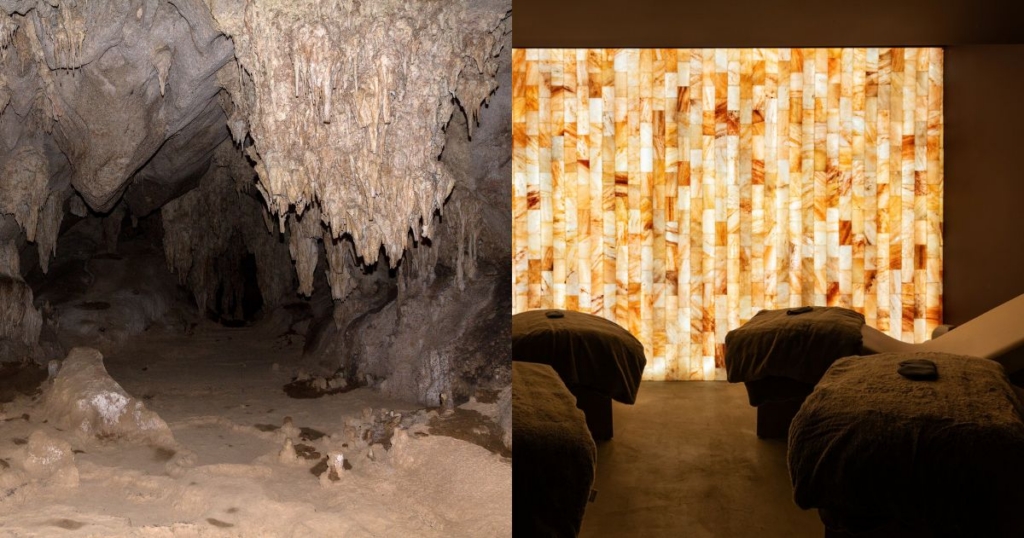
Halotherapy simply means salt therapy: sitting in a room where the air is filled with fine, dry salt particles. Whether you’ve searched “salt room near me” or “salt cave near me,” you’re looking for the same basic setup, just under a different name. There are two ways spas create this environment. An active salt room uses a machine called a halogenerator to grind salt into a fine mist and circulate it through the air. A passive room skips the machine and instead surrounds you with large salt deposits, salt-covered walls, or salt-lined floors in a climate-controlled space.
Either way, you’re not doing anything. You sit, you breathe normally, and the room does the rest. There’s no water, no heat, and no physical treatment involved. It’s closer to sitting in a quiet lounge than receiving a massage or a facial.
The idea behind halotherapy traces back over a century to Eastern European salt caves, where miners with respiratory conditions noticed they breathed easier underground. Modern salt rooms recreate that environment indoors, without the mine.
What Does Salt Therapy Actually Help With?
Here’s where Sacred Hour would rather be honest than oversell. According to the Cleveland Clinic, people use halotherapy for a few main reasons, but the clinical research behind it is still thin.
- Respiratory support. Breathing in fine salt particles may help thin mucus, which some people find makes coughs feel more productive and breathing feel easier, especially for those managing seasonal congestion or sinus pressure.
- Inflammation and skin clarity. Salt has natural anti-inflammatory properties, and some guests report calmer, less irritated skin after regular sessions.
- A slower nervous system. Even without the salt, sitting in a dim, quiet room for 30 to 45 minutes with nowhere to be tends to lower stress on its own.
What halotherapy does not have behind it is a large body of controlled clinical trials. Cleveland Clinic is direct about this: the research isn’t there yet to confirm the respiratory and skin claims at a medical level. That doesn’t mean guests aren’t feeling something real. It means salt therapy is best understood as a wellness amenity you might genuinely enjoy and benefit from, not a substitute for treating a diagnosed condition.
What Does a Salt Therapy Session at Sacred Hour Look Like?
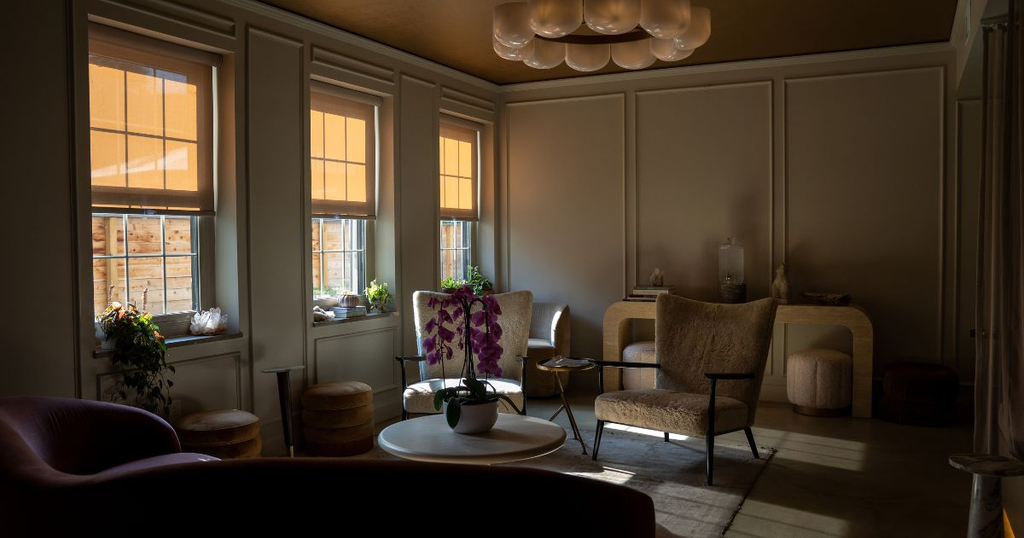
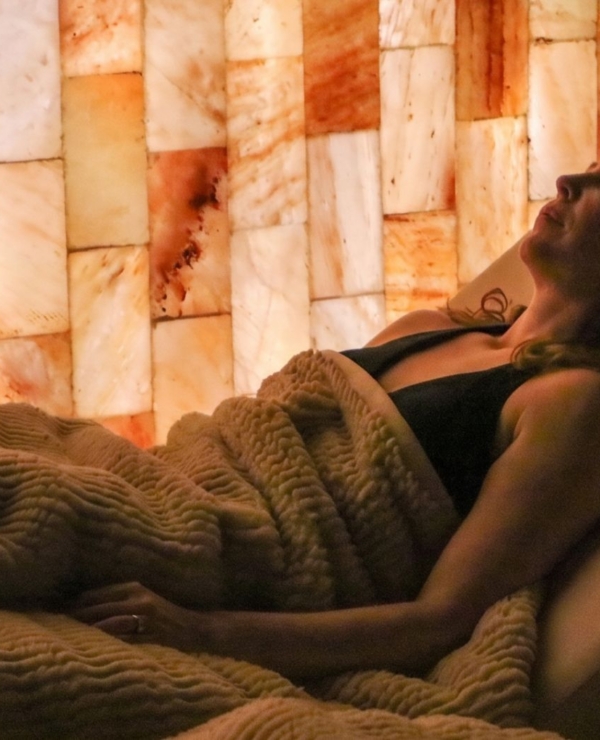
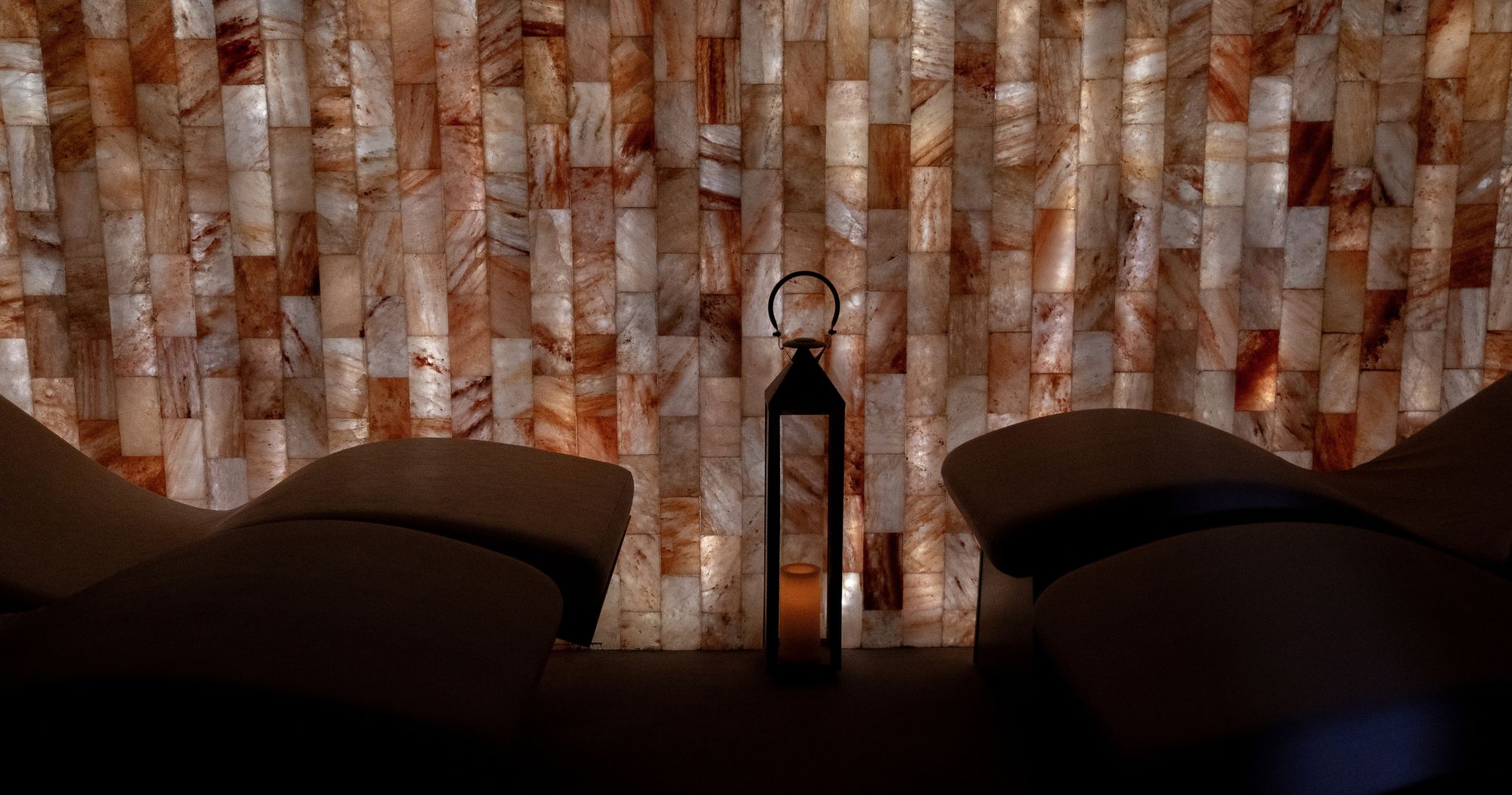
A session runs 30 to 45 minutes. You stay fully clothed (comfortable, loose clothing is best) and settle into a reclined chair inside the Salt Therapy Lounge at Sacred Hour’s Lakewood, Ohio facility. The room stays dim and quiet, with fine salt in the air and often a light layer of it visible on the floor.
Most guests close their eyes and simply breathe. There’s no pressure to do anything else. Some people bring a book or listen to something quietly; most just sit still and let the 30 to 45 minutes pass. You may notice a mild, dry, slightly salty taste or smell, and some guests cough a little more than usual as their airways respond. That’s a normal reaction to the salt particles, not a sign anything is wrong.
If you’re prone to claustrophobia, mention it when you book. The team can seat you near the door and walk you through exactly what to expect before the room fills with salt, so nothing catches you off guard.
Because Sacred Hour’s therapists and estheticians work under medical board oversight, the team can walk you through what to expect and help you decide whether a session fits your health history before you book.
Pairing Salt Therapy With the Rest of Your Visit
Salt therapy is designed to extend a visit, not stand alone. Sacred Hour’s “come early, stay late” philosophy means the facility is built for guests who want to layer a few amenities into one afternoon rather than rush in and out.
A common sequence:
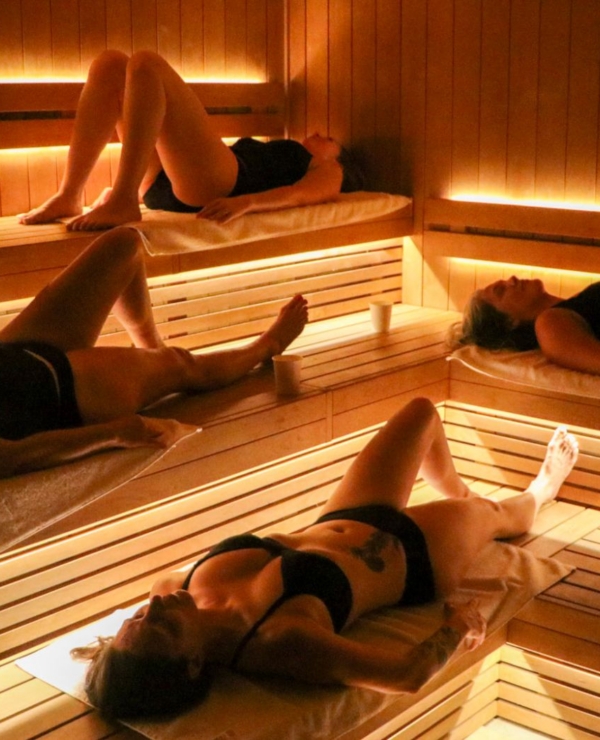
- sauna first to warm the body,
- then a salt therapy session to unwind and breathe easy,
- then a sauna and cold plunge to close things out with an energy boost.
Others prefer to add a salt therapy session before or after a massage, using it as a quiet transition between the outside world and the treatment room.
For a full breakdown of how salt therapy pairs with sauna and cold plunge, including sequencing and timing recommendations, see Sacred Hour’s complete recovery and wellness guide.
There’s no single “right” order. The point is that the 10,000-square-foot facility, the lounge, and the bar exist so you have somewhere to be before and after, not just during.
FAQ
Is salt therapy safe?
Yes, salt therapy is safe for most people. It’s non-invasive: you simply breathe in a room filled with fine salt particles, with no chemicals, needles, or physical manipulation involved. Guests with allergies or mild asthma often find it soothing, though it can occasionally trigger extra coughing as your airways adjust. If you have a diagnosed respiratory condition, talk with your doctor first and let Sacred Hour’s team know before you book.
How often should you do salt therapy?
There’s no universal schedule, since research hasn’t established an optimal frequency. Many guests start with one session and gauge how they feel, then decide whether to add it weekly, monthly, or as an occasional addition to a longer spa visit. Sacred Hour’s team can help you find a rhythm based on why you’re trying it and how your body responds.
Can you combine salt therapy with sauna or cold plunge in the same visit?
Yes, and many guests do. A common approach is sauna first to warm up, salt therapy to slow down and breathe, and cold plunge last for a recovery boost. There’s flexibility in the order. The main thing to plan for is time, since each amenity adds 20 to 45 minutes to your visit.
Does salt therapy actually work, or is it more relaxation than treatment?
Both, honestly. Clinical evidence for halotherapy’s respiratory and skin benefits is still limited, according to Cleveland Clinic. What’s well established is that sitting quietly in a calm room for 30 to 45 minutes lowers stress for most people, salt-related benefits or not. Treat it as a genuine wellness amenity rather than a medical treatment.
Ready to Breathe Easier?
Halotherapy is a straightforward wellness amenity: microscopic salt particles, a quiet room, 30 to 45 minutes, no pressure to do anything but breathe. The evidence behind its respiratory and skin claims is still catching up to the anecdotes, but the slower nervous system that comes from sitting still in a calm space is real on its own.
Salt therapy at Sacred Hour is included in select memberships and pairs naturally with sauna, cold plunge, and massage as part of a longer visit. Add our amenities to your visit and see how it fits into your next trip to Lakewood.