Some tension doesn’t respond to hands. It sits too deep. Sometimes the body’s too guarded to let touch in, or you’re simply too wired to lie still for ninety minutes. That’s the gap vibroacoustic therapy fills.
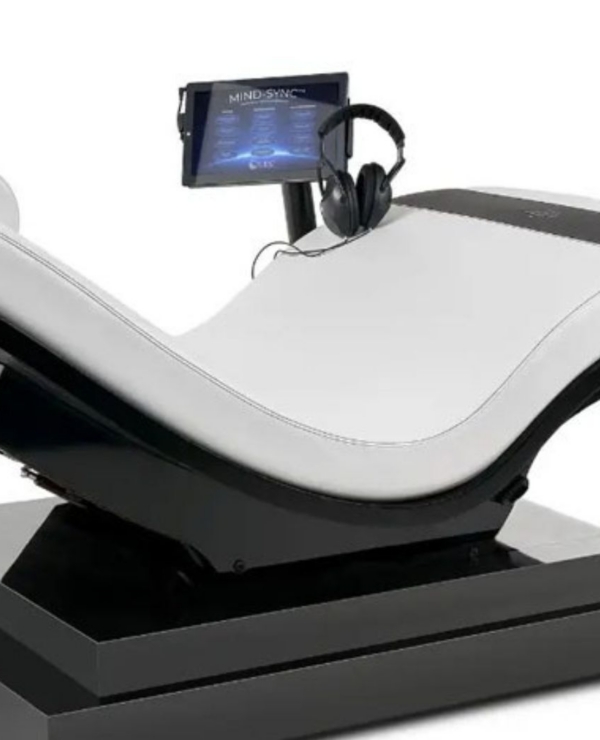
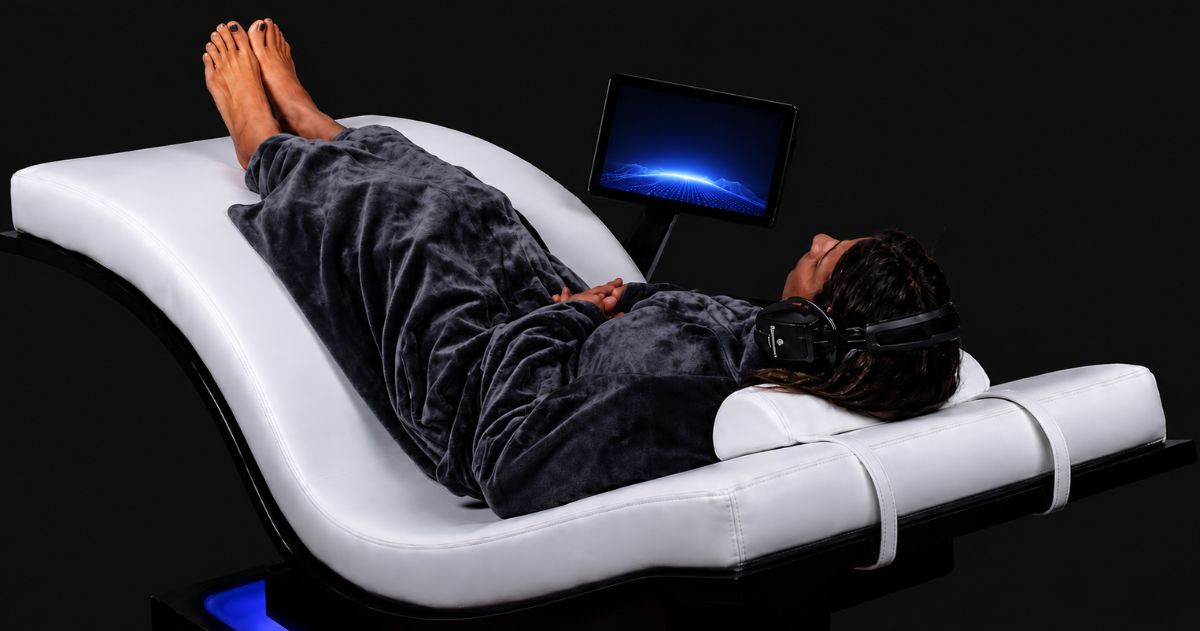
It’s sound you don’t just hear; you feel it. Delivered through our zero-gravity Mind-Sync 2.0™ Harmonic Wellness Lounger, low-frequency vibration moves through bone, tissue, and fluid until your whole body is resonating with it, not just your ears. No hands-on work. No prep. You recline, the chair drops into zero gravity, and the session does what it does.
At Sacred Hour, we built our name on touch. Our therapists have walked thousands of people through pain, stress, and recovery with their hands. Vibroacoustic therapy isn’t a replacement for that. It’s a different door into the same room: a nervous system reset that doesn’t require the body to be ready for touch at all. This post explains what vibroacoustic therapy is, what the research shows, who it helps, and what to expect from a session at Sacred Hour.
Key Takeaways
- Vibroacoustic therapy delivers low-frequency sound through a zero-gravity lounger. You feel the vibration through the body.
- Sessions are 30 minutes for one vibroacoustic program or 60 minutes for two full programs together. No preparation needed, no hands-on contact, no downtime after.
- Research links it to stress and anxiety reduction, pain and tension relief, improved sleep, and nervous system regulation.
- It’s particularly effective for clients whose nervous systems are too activated or guarded for hands-on work, but it benefits anyone carrying chronic stress, fatigue, or tension.
- At Sacred Hour, it can be booked as a standalone session or as a 22-minute prep before a massage or facial. The tissue response afterward is measurably different.
- Sacred Hour is adding this because healing doesn’t always look the same. This treatment reaches the nervous system at a frequency hands alone can’t always find.
What Is Vibroacoustic Therapy?
The name tells you exactly what’s happening. Vibroacoustic therapy combines sound (acoustic) with vibration to create a physical experience that is felt throughout the body.
You lie in a zero-gravity lounger fitted with transducers that turn sound frequencies into vibrations. These vibrations travel through bone conduction and fluid dynamics, reaching cells and tissues throughout your body. It’s nothing like lying near a speaker. The sensation is internal. Clients often describe it as a deep settling, a resonance that finds the tension before they’ve consciously located it themselves.
The zero gravity position isn’t incidental, either. When fully reclined, the chair distributes your weight evenly, taking pressure off the spine and placing the body in a state of structural ease. This position supports nervous system response before the vibration even begins.
At Sacred Hour, sessions run for 30 or 60 minutes in a private room. There are no therapists performing manual work during the session. It’s one of the rare treatments here where you’re not expected to do anything but arrive.
What the Research Shows About Vibroacoustic Therapy
Vibroacoustic therapy is a relatively young field in clinical terms, but the research is real and growing. Studies indexed in the National Library of Medicine document benefits in several areas, including anxiety and stress reduction, chronic pain management, improved sleep quality, and autonomic nervous system regulation.
Here’s the mechanism: low-frequency vibration activates the parasympathetic nervous system, which governs the body’s rest-and-recovery response. A 2025 peer-reviewed study in Frontiers in Sports and Active Living found that low-frequency vibration significantly increased parasympathetic activity, as measured by improved heart rate variability, compared with a control session. Heart rate slows, muscle tension eases, and stress hormones drop. The shift from a state of activation into a state of ease isn’t just how it feels. It shows up in the data.
Tabitha Baker, Sacred Hour’s founder, puts it plainly: “Sound and vibration therapy is a natural next chapter in our practice, rooted in the same science that makes manual therapy effective: cellular response, nervous system regulation, tissue recovery.”
The research is honest about what’s still emerging. Vibroacoustic therapy is not a cure. What the research consistently shows is that targeted low-frequency vibration reliably pushes the body toward rest, recovery, and lower activation. For most people walking through our doors, that’s the whole point.
Who Is Vibroacoustic Therapy For?
The easy answer is “anyone carrying chronic stress.” But it’s worth being more specific, because the people who benefit most from this treatment often don’t think of themselves as spa candidates at all.
Think about the person whose jaw has been clenched since sometime in 2019 and who has simply stopped noticing. Whose shoulders that never fully drop, even on a good day. Whose baseline hum of tension that’s been normal for so long it no longer registers as tension. This treatment was designed for that person.
Vibroacoustic therapy also reaches people that hands-on work cannot. Some clients arrive with a nervous system that’s too guarded, too activated, or too defended to let touch in the way it needs to. Clients navigating inflammation, post-surgical recovery, chronic pain, or too much stress to slow down for a massage. For them, sound therapy opens a door that touch sometimes can’t. “Not instead of touch, alongside it” is how Sacred Hour describes the positioning, and we mean that. This isn’t a consolation option. It’s a different kind of access to the same relief.
It’s also for the person who simply wants to decompress solo. Not every visit needs to be a full hands-on service. Sometimes you’re too frazzled for a 90-minute massage, and what you actually need is 30 minutes of quiet that does real work on your nervous system. Sacred Hour’s massage services remain the heart of what we do, but they don’t have to be the only door in.
Men, recovery clients, anyone returning from surgery or living with chronic pain, anyone whose body is working harder than it has the capacity to recover from right now. The treatment works on physiology, not demographics.