The fastest way to choose the right type of massage is to start with the outcome you want, not the technique name. Want deep stress relief? A lighter, slower massage usually works better than a firm one. Dealing with a stubborn knot or chronic tightness? You need more pressure and a therapist trained to work into that specific spot.
Most guides list massage styles by name and leave you to guess which one fits. This one works the other way. It starts with what your body actually needs, then points you to the right option. You can find them all in Lakewood on Sacred Hour’s full menu of massage styles.
Key Takeaways
- The right massage depends on your goal (relaxation, pain relief, recovery, or a unique health journey like pregnancy), not just a technique name you may not recognize.
- Lighter pressure supports relaxation and nervous system reset. Firmer pressure targets chronic tension and muscle recovery.
- Sacred Hour offers many massage styles: Swedish, Deep Tissue, Indian Head, Earth + Sky, Prenatal, Manual Lymphatic Drainage, Couples, Thai, Cupping, Vagus Nerve Massage, and Undaria Body Massage.
- You can combine styles and adjust pressure within a single session. If you are not sure, book Deep Tissue: Deep Tissue therapists can always go lighter, but Swedish therapists cannot always go firmer. Tell your therapist what you want before the massage starts, and speak up if anything feels off during it.
- Every therapist at Sacred Hour works under medical board oversight, so pressure and technique are adjusted safely for your specific needs and preferences.
Start With the Outcome You Want, Not the Technique Name
Before picking a massage by name, answer one question: what do you actually want out of the service? Most people land in one of four categories. Each one points toward a different kind of session.
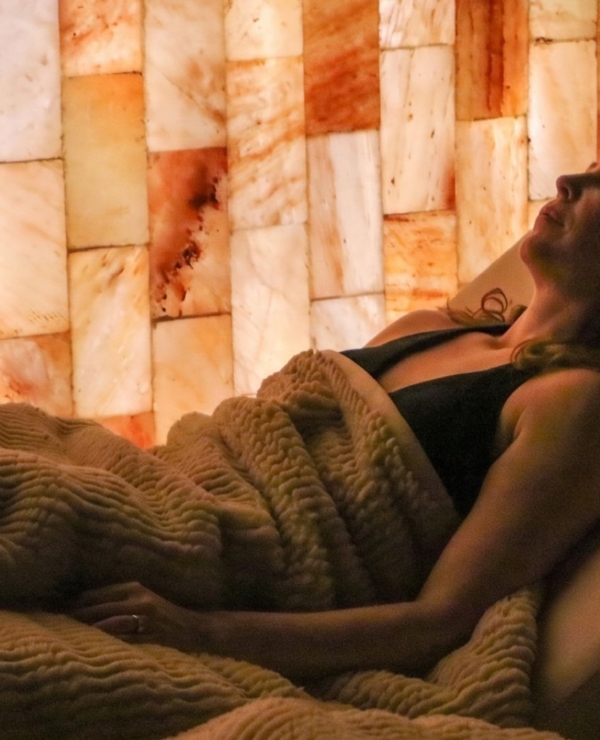
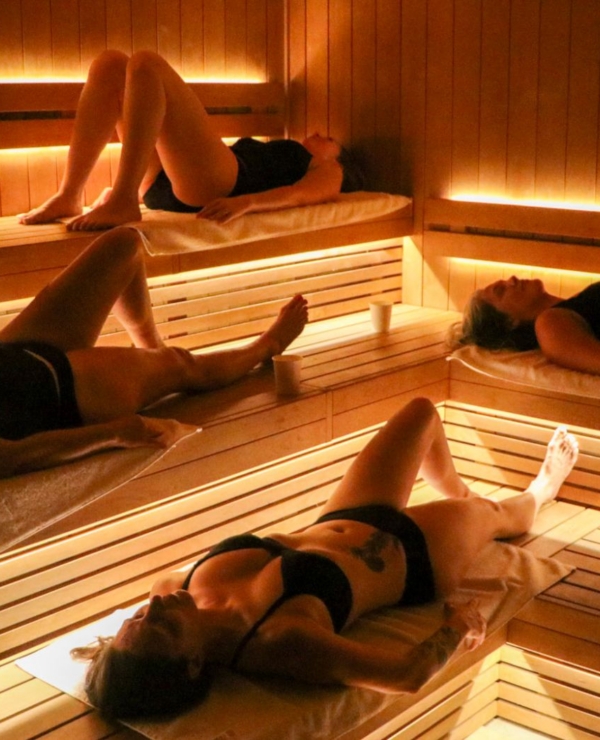
- Stress relief and relaxation. You want to slow down, quiet a busy mind, and leave feeling calmer than you arrived. Book a Swedish massage, and consider adding amenity access for the sauna, cold plunge, and salt therapy to extend the reset.
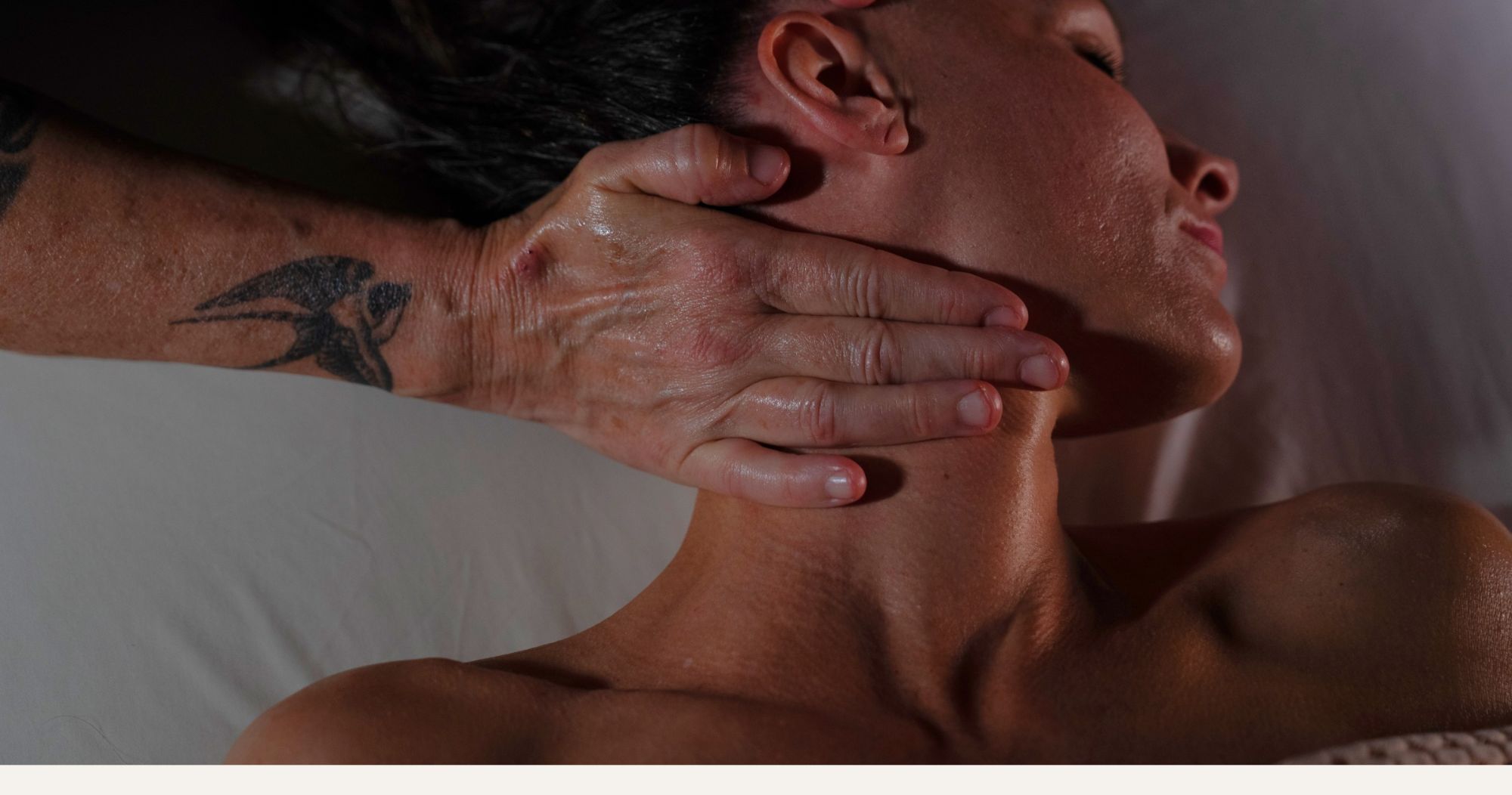
- Pain or tension relief. You have a specific tight spot, like your shoulders or lower back, that needs focused pressure. Book a Deep Tissue massage, or try Cupping for tension across the back and shoulders.
- Recovery and performance. You train regularly or push your body hard, and you want a massage that supports muscle recovery. Consider booking a 75- or 90-minute massage to cater to the full body, then add amenity access for the sauna, cold plunge, and salt therapy.
- A specific life stage or health journey. You are pregnant or on another unique health journey, and you want a massage built around where your body is right now. During pregnancy, book a Prenatal massage.
Once you know your category, the technique name stops mattering as much. It becomes a tool for getting what you already decided you wanted.
Types of Massage at Sacred Hour, Organized by What You Need

Here is how Sacred Hour’s full massage menu maps to those four goals.
For stress relief and relaxation: Swedish massage uses lighter, flowing pressure. It calms the nervous system rather than working out deep tension. The Vagus Nerve Meditative Massage by OSEA draws on craniosacral therapy and uses aromatherapeutic oils to calm the mind, relax the muscles, and activate the body’s soothing vagus nerve response. At 90 minutes, it is a good fit if your mind races even when your muscles feel fine. Earth + Sky Massage pairs Indian Head massage with foot massage, an easy choice if you want to unwind without full-body pressure. Thai massage combines stretching with rhythmic pressure. It is a good option if you want something more active than a typical relaxation massage, but still calming overall.
For pain or tension relief: Deep tissue massage uses firm, targeted pressure to reach the deeper layers of muscle where chronic tightness builds up. Cupping uses suction instead of direct pressure. Many guests find it reaches tension that deep tissue work alone does not touch, especially across the back and shoulders.
For recovery and performance: Undaria Body Massage by OSEA is built around active muscle recovery. Manual lymphatic drainage supports circulation and reduces post-exertion puffiness. Sacred Hour has the largest manual lymphatic drainage team in Ohio. If recovery is your goal, this is worth a closer look even if you have never tried it before. Manual lymphatic drainage is offered as a general wellness service, and it is not available for guests who are pregnant or who have had surgery within the last six weeks.
For a specific life stage: Prenatal massage uses positioning and pressure built specifically for pregnancy. Prenatal massage is safe during the right window of pregnancy when a trained therapist performs it, and every Sacred Hour prenatal therapist is trained in the technique. Indian head massage focuses on the scalp, neck, and shoulders. It is a gentler option for anyone easing back into touch therapy after time away from it.
Couples massage does not fit neatly into one category. It is really about the shared experience as much as the technique. Planning a couples massage usually starts with each person picking their own goal from the list above, since the two of you do not have to choose the same style.
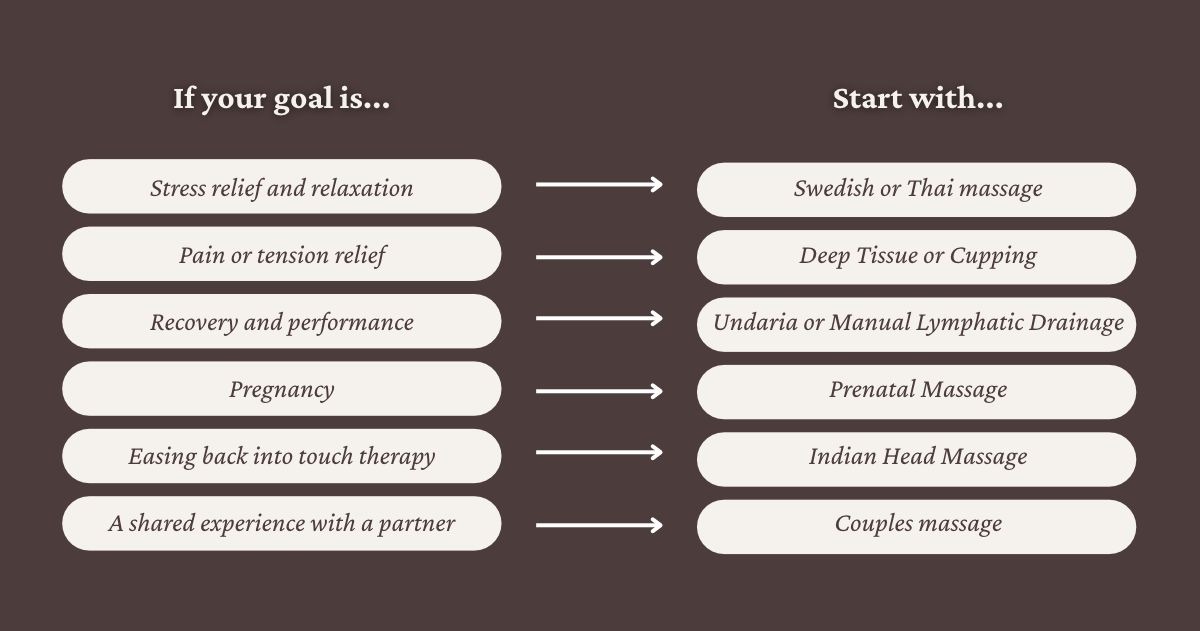
This table is a starting point, not a strict rule. Plenty of guests mix categories. Think of someone training for a race who also wants the calming effect of a slower massage after a hard week. If your situation spans two goals, say so when you book. Our Reservations Team can help match you with the right combination.
How to Know What Pressure to Ask For
Pressure is where most first-timers feel unsure. It is simple once you know the scale. Light pressure feels like a gentle glide across the skin, barely working into muscle at all. Medium pressure is firm enough to notice but should never hurt. Deep pressure works into muscle layers and can feel intense in the moment, though it should never cross into sharp pain.
A good rule: if you are wincing or holding your breath, the pressure is too high. Tell your therapist what you are hoping for before the session starts. Say something if it needs to change partway through. Adjusting pressure mid-massage is normal and expected, not an inconvenience.
Can You Combine Modalities in One Visit?
Yes. Many guests combine styles within a single booking, especially on a longer visit. A common pairing is Swedish massage for the first half of a session, then deep tissue work on one or two problem areas for the second half. Book this pairing as a Deep Tissue massage, since Deep Tissue therapists can always go lighter, but Swedish therapists cannot always go firmer. Sequencing treatments across a full spa day is also a good way to pair massage with other services. For a longer visit built around multiple goals, add a full body scrub or a facial, or add amenity access for the sauna, cold plunge, and salt therapy.
If you are not sure what combination makes sense, say so when you book. Sacred Hour’s team can build a session around your goals rather than asking you to pick a single technique name upfront.
FAQ
What’s the difference between deep tissue and Swedish massage?
Deep tissue massage uses firm, targeted pressure to reach deeper muscle layers and work out chronic tension. Swedish massage uses gentler, flowing strokes to calm the nervous system instead. Neither is better. They serve different goals: one for chronic tightness, one for stress relief. A full comparison of Swedish and deep tissue techniques covers the differences in more depth.
How do I know what kind of massage to book?
Start with your goal rather than a technique name. Want to relax and quiet a busy mind? Choose a lighter style. Have a specific tight spot or chronic tension? Choose a firmer, targeted style. Pregnant? Choose a Prenatal massage, built specifically for pregnancy. On another unique health journey? Mention it when you book, and the Reservations Team can match you with the right style.
Can I combine modalities in one session?
Yes. Many Sacred Hour guests combine two styles in one booking. A common pattern is lighter work for part of the session, then firmer, targeted pressure for a specific area during the rest. When you book, choose Deep Tissue and mention what you want to combine. Deep Tissue therapists can always go lighter, but Swedish therapists cannot always go firmer, so your therapist can build the session around both.
How much pressure should I ask for?
Pressure should feel noticeable but never painful. Light pressure barely works into muscle. Medium pressure is firm but comfortable. Deep pressure works into muscle layers and can feel intense, but it should never cross into sharp pain. If you are wincing or holding your breath, ask your therapist to ease off.
Booking the Right Massage With Confidence at Sacred Hour
Choosing from more than ten massage styles gets a lot simpler once you start from the outcome you want instead of a list of unfamiliar names. Every therapist at Sacred Hour works under medical board oversight. So whichever style fits your goal, pressure and technique are adjusted safely to your specific situation.
Explore the full massage menu at Sacred Hour to see session lengths and book the style that matches what your body needs right now.